

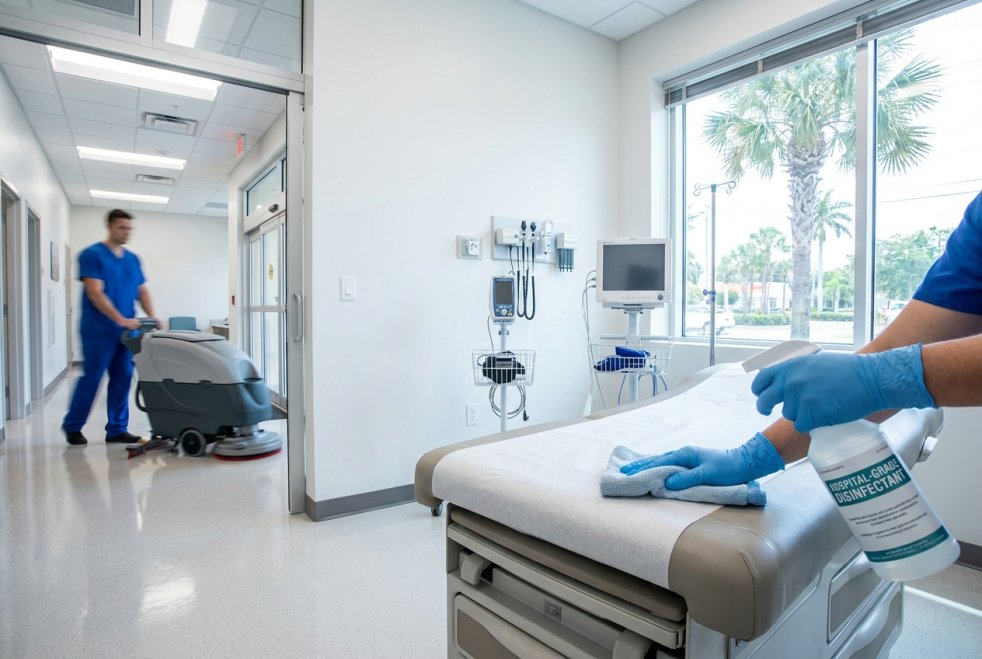
Best Cleaning Practices for Urgent Care Centers in Casselberry, FL
Urgent care centers in Casselberry and the greater Central Florida area face a unique challenge: high patient turnover, year-round humidity, and a constant stream of people who are already sick. That combination makes professional medical facility cleaning not just a preference, but a necessity for protecting patients, staff, and your reputation.
Whether you manage a standalone urgent care clinic or a multi-suite medical office, understanding the right cleaning practices can make a measurable difference in infection control and compliance.
Why Urgent Care Centers Demand a Higher Cleaning Standard
Urgent care facilities are not typical commercial spaces. Patients arrive with respiratory illnesses, open wounds, and contagious conditions throughout the day. Unlike hospitals, most urgent care centers operate with lean staffing and fast patient cycles, which means contaminated surfaces get touched again quickly.
Florida's warm, humid climate adds another layer of risk. Mold, bacteria, and viruses thrive in high-humidity environments, and Casselberry's subtropical conditions mean that contamination can spread faster indoors if cleaning protocols are not consistent and thorough.
High-Risk Areas That Require Priority Attention
Not all areas of an urgent care center carry equal risk. Cleaning crews need to focus extra effort on the zones where contamination concentrates most rapidly.
- Waiting rooms and patient seating (frequently touched by symptomatic visitors)
- Exam tables, armrests, and privacy curtains
- Door handles, light switches, and call buttons
- Restrooms shared by patients and staff
- Check-in counters, clipboards, and payment terminals
- Triage areas and any surface where bodily fluids may be present
These touchpoints should be disinfected multiple times throughout the day, not just during end-of-day cleaning. A single cleaning cycle is not enough in a busy clinic environment.
Warning Signs Your Current Cleaning Protocol Is Falling Short
Many facility managers do not realize their cleaning program has gaps until a problem becomes visible. Watch for these red flags.
- Staff reporting frequent illness or cross-contamination concerns
- Odors in exam rooms or restrooms that return quickly after cleaning
- Visible grime buildup on baseboards, vents, or under waiting room seating
- Patient complaints about the cleanliness of the facility
- Failed or flagged results during infection control audits
Any one of these signs is worth taking seriously. In a medical setting, the cost of inaction goes beyond appearance and directly affects patient safety.
EPA-Approved Disinfectants and Proper Dwell Times
Using the right product is only half the equation. Disinfectants need adequate contact time (called dwell time) to actually kill pathogens. Many cleaning crews apply a product and wipe it away too quickly, leaving surfaces only partially sanitized.
For urgent care centers, look for EPA-registered hospital-grade disinfectants effective against MRSA, C. diff, influenza, and other common clinical pathogens. In Florida's humid environment, surfaces may also need treatment with products that inhibit mold and mildew growth, particularly in restrooms and areas near exterior walls.
Daytime Cleaning vs. Terminal Cleaning: Know the Difference
A complete medical facility cleaning program includes two distinct types of service.
- Daytime cleaning covers ongoing disinfection of high-touch surfaces, restroom checks, and waiting area maintenance while the clinic is open
- Terminal cleaning is a comprehensive top-to-bottom disinfection performed after hours, covering floors, walls, vents, equipment surfaces, and all clinical areas
Both are essential. Daytime cleaning controls contamination as it happens. Terminal cleaning resets the facility to a safe baseline before the next business day begins.
Florida Climate Factors That Affect Medical Cleaning Schedules
Casselberry's heat and humidity create conditions that accelerate bacterial and mold growth on surfaces. HVAC systems work harder here, which also means more airborne particles circulating through clinic spaces. Air vents and return grilles in medical offices should be cleaned and inspected regularly to prevent contaminated air from cycling through the building.
During Florida's rainy season (June through September), wet footwear and umbrellas bring additional moisture and outdoor contaminants into the facility. Entry mats, floor drains, and entryway surfaces need increased attention during these months.
What to Look for in a Medical Facility Cleaning Company
Not every commercial cleaning company is equipped to handle the specific demands of a healthcare environment. When evaluating a provider, confirm they offer the following.
- Experience with medical and clinical facility cleaning standards
- Staff trained in bloodborne pathogen protocols and OSHA guidelines
- Use of EPA-registered hospital-grade disinfectants
- Flexible scheduling that includes both daytime and after-hours service
- Documented cleaning checklists and quality control processes
A cleaning crew that works in retail spaces by day is not the same as one trained for infection control in a clinical setting. The difference matters significantly in a healthcare environment.
Ready to Upgrade Your Urgent Care Cleaning Program?
Exclusive Cleaning Services LLC provides professional medical facility cleaning services for urgent care centers and healthcare offices throughout Casselberry and Central Florida. Our team understands the compliance standards, disinfection protocols, and scheduling demands that clinical environments require.
Call us today at (407) 305-4306 to schedule a walkthrough and get a customized cleaning plan built around your facility's specific needs.