

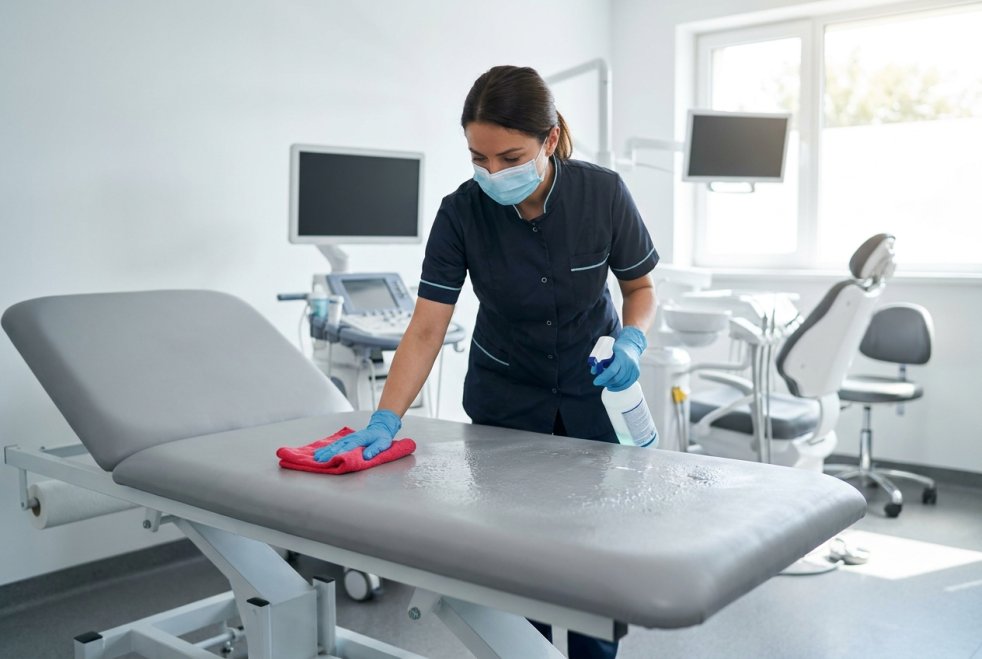
How Professional Medical Cleaning Helps Reduce Infection Risk
Every square foot of a medical or healthcare-adjacent facility carries a different level of infection risk than a typical office or retail space. Exam rooms, waiting areas, and shared equipment come into contact with bodily fluids, respiratory droplets, and bacteria that ordinary cleaning simply is not designed to handle. In Central Florida, where heat and humidity keep pathogens alive on surfaces longer and patient volume rarely slows down, the gap between routine cleaning and true infection control becomes a real liability for practice owners.
Why Central Florida Facilities Face Unique Infection Control Challenges
Central Florida's year-round humidity, often sitting between 55 and 75 percent relative humidity, creates conditions where bacteria, mold, and certain viruses survive on surfaces longer than they would in drier climates. Combine that with a large seasonal population of older residents and winter visitors, and medical offices, urgent care clinics, dental practices, and senior living communities across the region see steady patient traffic almost every week of the year. A cleaning routine built for a retail store or office building simply is not equipped to handle that kind of biological load.
How Often Should Medical Facilities Be Professionally Cleaned?
Most medical and healthcare-adjacent facilities in Central Florida need professional disinfection cleaning at least once daily, with high-touch surfaces like exam tables, door handles, and waiting room chairs wiped down multiple times throughout the day. The right frequency depends on patient volume, the procedures performed, and the vulnerability of the people who walk through your door.
Urgent care and walk-in clinics: These facilities typically need full terminal cleaning nightly plus disinfection between patients, since foot traffic can exceed 40 to 60 visits a day during flu season, which in Florida often stretches longer than in northern states because of year-round travel and the snowbird population.
Dental and outpatient practices: Operatories need complete disinfection between every patient, while common areas and restrooms generally require at least one deep clean each day, plus spot cleaning during business hours.
Senior living and assisted care communities: Shared spaces like dining rooms and activity rooms often need two or more disinfection passes daily, since residents are more vulnerable to respiratory and gastrointestinal infections that spread quickly in group settings.
Routine Janitorial Cleaning vs Medical-Grade Disinfection
Standard janitorial service focuses on appearance: emptying trash, vacuuming, wiping visible surfaces, and restocking supplies. It looks clean, and often is clean in a general sense, but it is not designed to break the chain of infection. Medical-grade disinfection is a different process entirely. It uses EPA-registered, hospital-grade disinfectants applied with correct dwell times, which is the amount of time a product must stay wet on a surface to actually kill the target pathogens, often 1 to 10 minutes depending on the product and organism. Standard cleaners are frequently wiped dry within seconds, which means the surface looks clean but the pathogen was never actually eliminated. Medical cleaning also follows a defined sequence, moving from the least contaminated areas to the most contaminated, to avoid spreading bacteria from a restroom into a waiting room, for example. That sequencing, along with color-coded cloths and separate equipment for different zones, is the real difference between a clean-looking room and a genuinely disinfected one.
A Local Scenario Central Florida Practice Owners Recognize
Picture a busy urgent care clinic near a Central Florida retail corridor during peak flu season. Patient volume doubles between October and April as seasonal residents arrive and respiratory illness spreads through crowded waiting rooms. The front desk starts noticing more call-outs among staff, and a few patients mention lingering odors near the restrooms. Nothing looks obviously dirty, but the infection risk is climbing because the existing cleaning contract was built for a low-traffic office, not a clinic seeing 50 patients a day. This is the exact situation where a scheduled upgrade to medical-grade disinfection protocols, rather than a one-time deep clean, makes the difference between an isolated bad flu season and a recurring staffing and reputation problem.
What the Professional Medical Cleaning Process Looks Like
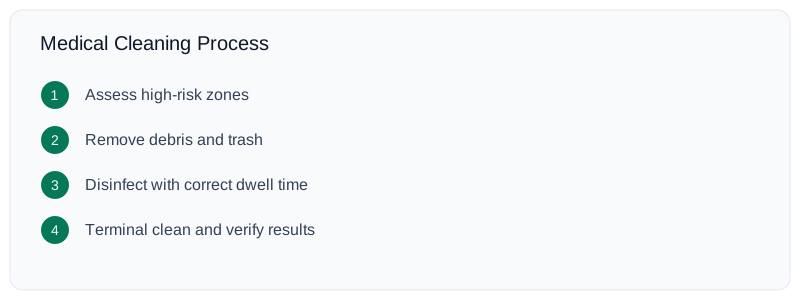
A properly run medical cleaning visit follows a consistent sequence every time, regardless of which technician is on site. Consistency is what prevents gaps in coverage.
- Assess and stage the space, identifying high-risk zones like exam rooms, restrooms, and reception counters before any cleaning begins.
- Remove visible debris and trash first, since disinfectants cannot penetrate through organic material.
- Apply hospital-grade disinfectant to high-touch surfaces and allow the full manufacturer-specified dwell time before wiping.
- Complete a terminal clean of floors, fixtures, and equipment using color-coded tools to prevent cross-contamination between zones.
- Verify results with a final walkthrough and log the visit for compliance and quality records.
How Much Does Professional Medical Cleaning Cost?
Professional medical cleaning for a small Central Florida clinic or dental office generally runs between 600 and 2,500 dollars per month, depending on square footage, visit frequency, and how many rooms require full disinfection versus general cleaning. Larger facilities or those with surgical suites, imaging rooms, or overnight care will fall higher in that range or need a custom quote.
Small practices under 3,000 square feet: Daily disinfection with weekly deep cleaning typically falls in the 600 to 1,200 dollar monthly range.
Mid-size clinics and multi-provider offices: Facilities between 3,000 and 8,000 square feet with higher patient counts usually run 1,200 to 2,500 dollars monthly.
Senior living and larger healthcare campuses: These typically need a custom proposal based on shared living spaces, dining areas, and resident room turnover, since pricing varies significantly by layout and service frequency.
Warning Signs Your Current Cleaning Protocol Isn't Reducing Risk
Some warning signs are easy to miss until infection rates or staff sick days start climbing.
- Lingering odors in restrooms or exam rooms even after cleaning is completed
- Visible residue or dust buildup on equipment, vents, or baseboards
- An uptick in staff illness or patient complaints about cleanliness
- Cleaning staff wiping surfaces dry immediately after applying disinfectant
- No documented cleaning log or inconsistent visit times from your current provider
Florida Regulations and Standards That Apply
Florida healthcare facilities operate under oversight from the Agency for Health Care Administration, and any practice handling bodily fluids or sharps must follow the OSHA Bloodborne Pathogens Standard under 29 CFR 1910.1030, which sets requirements for exposure control plans and proper disposal procedures. On top of that, the CDC recommends using disinfectants listed on the EPA's List N, which are verified effective against pathogens including MRSA. A cleaning contractor familiar with these standards protects your practice from compliance issues in addition to reducing actual infection risk.
Partner with Exclusive Cleaning Services LLC for Consistent Infection Control
Exclusive Cleaning Services LLC works with medical offices, dental practices, urgent care clinics, and senior living communities across Central Florida to build cleaning schedules that match real patient volume and real risk, not a generic office cleaning template. Our teams are trained on proper dwell times, cross-contamination prevention, and documentation that holds up if your facility is ever reviewed. Call (407) 305-4306 today to schedule a walkthrough and get a cleaning plan built around your facility's actual infection control needs.
Frequently Asked Questions
Is medical-grade disinfection safe for patients and staff to be around?
Yes, when applied correctly. Hospital-grade disinfectants used by trained technicians are applied according to manufacturer instructions, and areas are ventilated and dry before patients re-enter, so there is no added exposure risk to people using the space.
Can a small practice request medical cleaning without a long-term contract?
Most providers, including a facility just getting started with disinfection protocols, can begin with a trial schedule before committing to a longer agreement, though consistent recurring service is what actually lowers infection risk over time.
Do waiting rooms need the same disinfection level as exam rooms?
Waiting rooms need frequent high-touch disinfection but not the same terminal cleaning level as exam rooms, since exam surfaces have direct contact with patients while waiting areas mainly need shared surfaces like armrests, counters, and door handles addressed regularly.